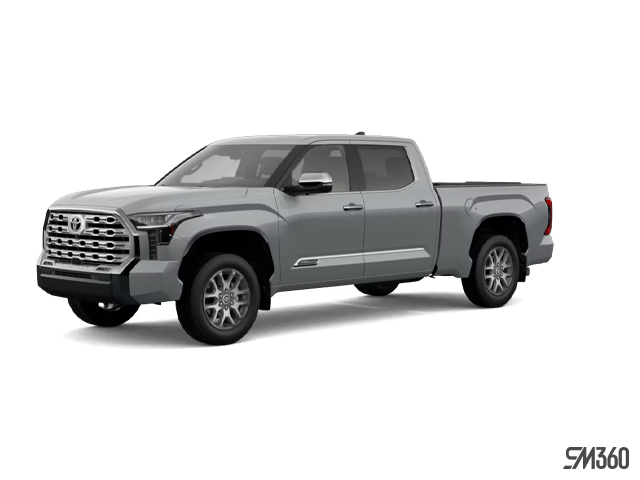
Photo for illustrative purposes only.
Find out more
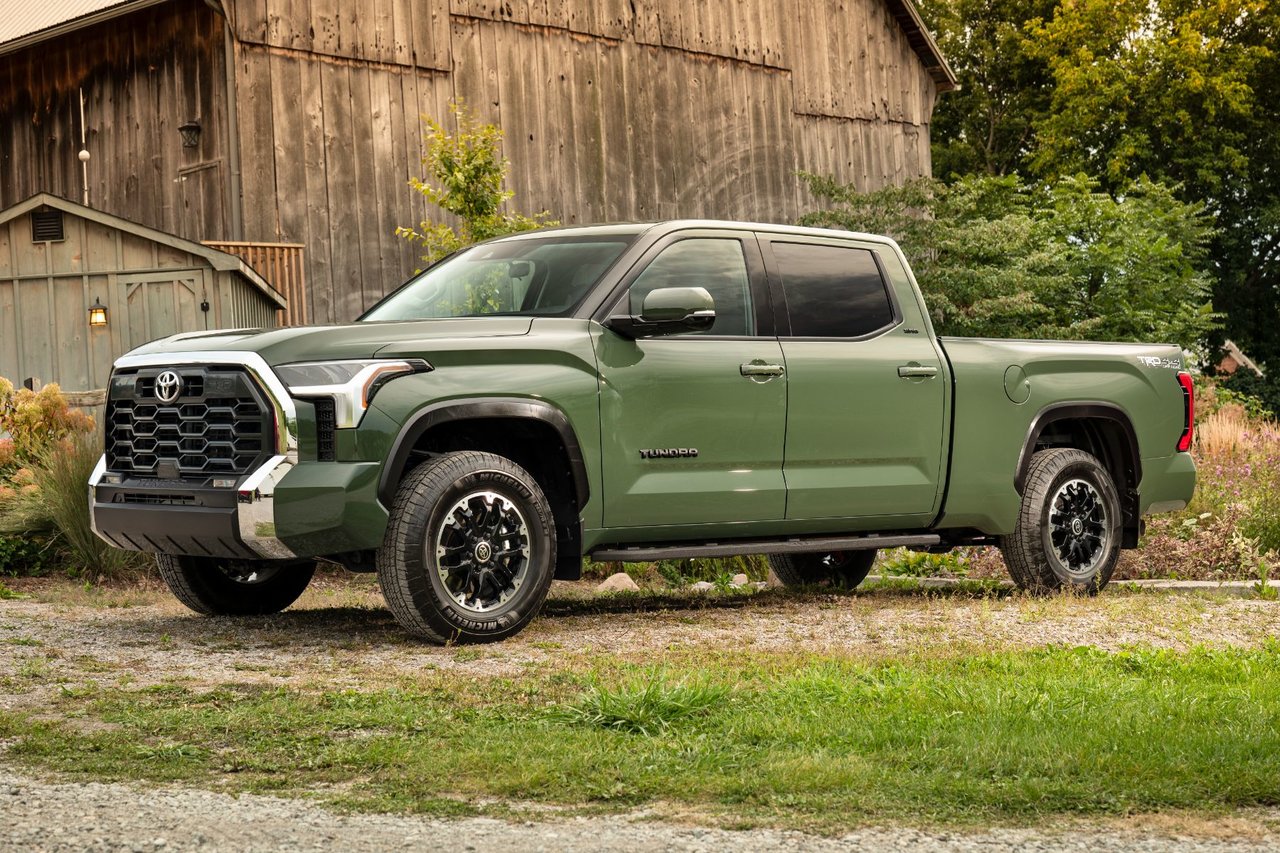
Hooking up a boat or travel trailer for the first big weekend on the water starts with one question: can your truck actually handle the load? The 2026 Toyota Tundra spans a wide range of tow ratings depending on cab, bed, and powertrain. Before you leave the driveway, match your real loadout, boat, trailer, gear, and passengers, against the number stamped on your specific truck’s door jamb.
Hot pavement, long highway stretches to the cottage, and repeated stops at lake-access ramps put more strain on a drivetrain than a quick weekend errand. A rated tow capacity assumes ideal conditions, not a truck loaded with fuel, coolers, and three passengers on a July afternoon.
The Tundra’s two TOW/HAUL driving modes adjust shift points and braking behaviour for grades, and Hill-start Assist Control is standard across Double Cab trims. Both matter on the rolling terrain common to cottage-country routes, where holding a trailer steady on an incline is part of the drive.
A properly equipped Tundra for towing includes: - A heavy-duty tow hitch receiver, ball mount, and trailer wiring, standard across Double Cab trims - A trailer brake controller, standard on the Double Cab SR5 L and available on TRD Off Road and select CrewMax grades - Power extendable/folding towing mirrors, added through package options on TRD Off Road, Platinum, and Capstone grades - Tire load capacity checked against your final GVWR, confirmed on the door-jamb label
Most Double Cab gas trims run the 3.4-litre twin-turbo V6 at 358 hp and 406 lb-ft of torque. The SR5 L gets a re-tuned version of the same engine producing 389 hp and 479 lb-ft, which is where the bigger tow number shows up.
The i-FORCE MAX hybrid available on CrewMax Limited grades and above pairs that same 3.4-litre V6 with an electric motor for a combined 437 hp and 583 lb-ft of torque, with up to 500 lb-ft available from a standing start. That instant torque is useful backing a loaded trailer up a boat ramp or pulling away from a stop sign with a full load, situations where a gas engine has to build revs first.
Fuel range matters on cottage routes with sparse gas stations. With the 122 L tank and an 11.7 L/100 km combined rating, the hybrid CrewMax is good for roughly 1,040 km between fill-ups, useful on longer runs up Ontario’s cottage corridors where stations thin out.
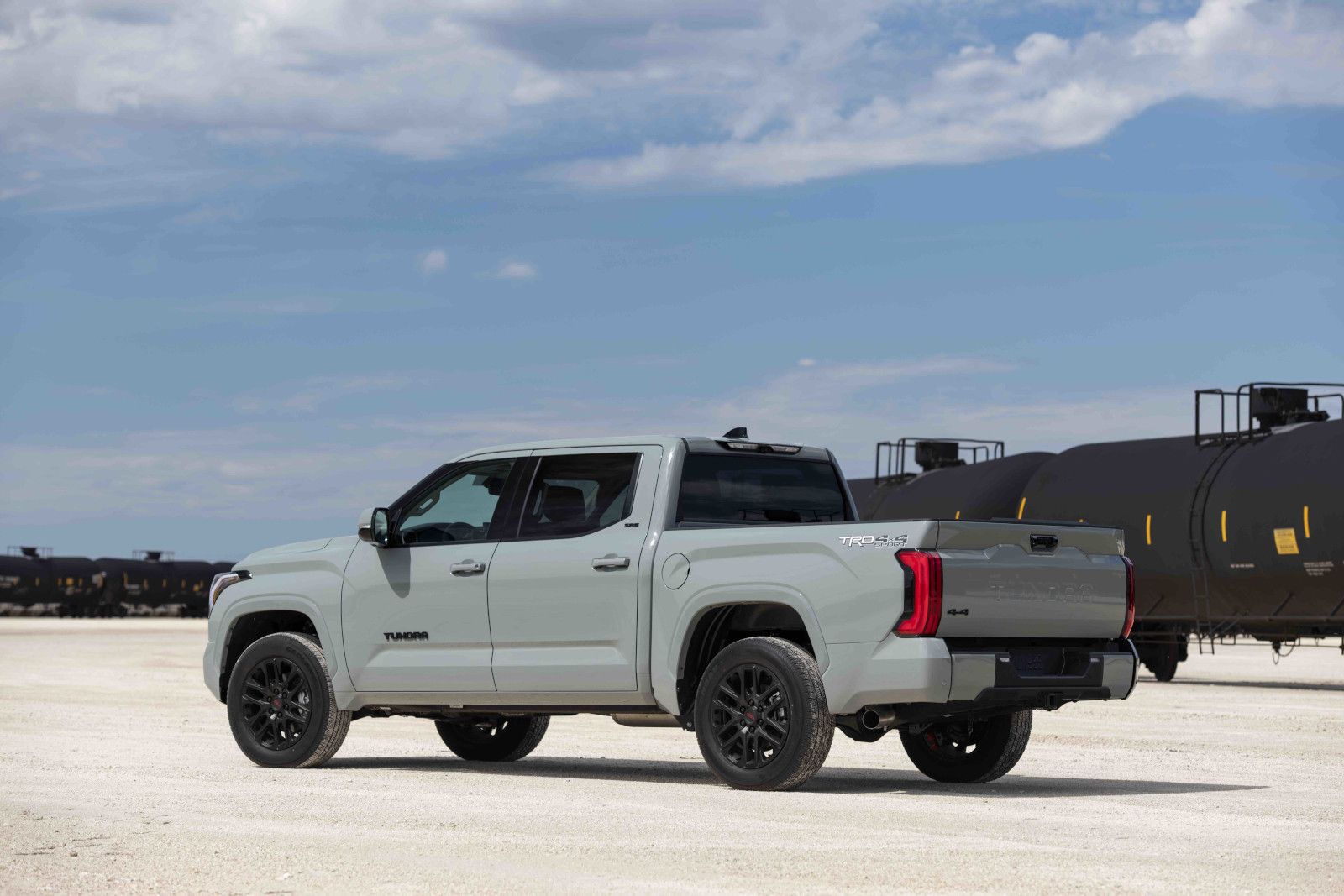
|
Trim |
Drivetrain |
Horsepower |
Torque |
Max Towing |
Payload |
|
Double Cab SR 4x2 Regular Bed |
2WD |
358 hp |
406 lb-ft |
8,289 lbs (3,760 kg) |
1,940 lbs |
|
Double Cab SR 4x2 Long Bed |
2WD |
358 hp |
406 lb-ft |
8,289 lbs (3,760 kg) |
1,874 lbs |
|
Double Cab SR |
4WD |
358 hp |
406 lb-ft |
8,289 lbs (3,760 kg) |
1,885 lbs |
|
Double Cab SR5 L |
4WD |
389 hp |
479 lb-ft |
11,089 lbs (5,030 kg) |
1,808 lbs |
|
CrewMax Hybrid Limited |
4WD |
437 hp |
583 lb-ft |
11,171 lbs (5,067 kg) |
1,609 lbs |
Notice that the Double Cab SR keeps the same 8,289 lb (3,760 kg) tow rating whether it is 2WD or 4WD. The jump to 11,089 lbs (5,030 kg) on the SR5 L comes from the higher-output engine, not from adding four-wheel drive.
Cab choice affects more than towing. Rear legroom grows from 846 mm in a Double Cab to 1,057 mm in a CrewMax, which matters for families hauling gear plus passengers to the cottage. Bed length runs from 78 in on the Double Cab SR to 97.2 in on the SR5 L, giving longer-bed trucks more room for coolers and dock gear ahead of the trailer tongue.
Approach and departure angles also shift by configuration. The 4x2 Regular and Long Bed trucks offer a 23-degree approach angle but only 22 degrees departing, while the 4WD SR and SR5 L trade that for a 21-degree approach and a 24-degree departure. That extra departure clearance is the number that matters most backing down a steep boat launch.
Payload drops as trims add weight, from 1,940 lbs on the base Regular Bed SR down to 1,609 lbs on the CrewMax Hybrid Limited. Passengers, bed cargo, and a full 122 L tank all eat into that number before a trailer’s tongue weight is even added. The Load Carrying Capacity label on the driver’s door jamb reflects your specific truck, not the brochure figure, and weighing the truck with all occupants and gear aboard before hitching up is the only way to know your real starting point.
An owner with a modest fishing boat and a light utility trailer rarely needs more than the Double Cab SR’s 8,289 lb (3,760 kg) rating, and the base trim keeps the tow package standard without paying for features they won’t use.
Someone pulling a larger runabout or a travel trailer closer to the Tundra’s upper range benefits from the SR5 L’s 11,089 lb (5,030 kg) rating, standard trailer brake controller, and Drive Mode Select, all useful on longer highway pulls.
Buyers who launch often at rougher ramps should look at the TRD Off Road package, which adds power extendable/folding towing mirrors and a trailer brake controller on top of the SR5-based underpinnings, useful for tighter sightlines at crowded boat launches.
For drivers hauling heavier loads repeatedly, the CrewMax Platinum’s optional Load-leveling Rear Height Control Air Suspension keeps the truck level under tongue weight, and its Panoramic View Monitor with Trailer Backup Guide helps line up a trailer at a busy dock without a spotter.
Matching a trailer to the right 2026 Tundra configuration comes down to torque, tow-package equipment, and the load number on your truck’s door jamb, not just the headline max rating.
Visit Whitby Toyota in Whitby, Ontario to review hitch, wiring, and mirror packages for your specific boat or trailer, and schedule a towing consultation before your next cottage run.
Photo for illustrative purposes only.
Find out more
Six-Speed Manual: Which 2026 Toyota Tacoma Models Still Offer One?
If you’re shopping the 2026 Tacoma in Ontario because you want to actually row your own gears, the lineup can be confusing. Toyota builds 14...
Read more
What Electronic On-Demand AWD Adds to the 2026 Toyota Crown Signia
Ontario roads swing from gravel shoulders to rain-slicked highways in the same afternoon. A shopper cross-shopping hybrid SUVs in Ontario often...
Read more
Multi-Terrain Select Explained: How the 2026 Toyota Tundra TRD Off Road Handles Rough Ground
Gravel shoulders, muddy laneways, and rutted cottage roads are part of daily life for a lot of Ontario truck owners. The question is whether a...
Read morePowered and developed by