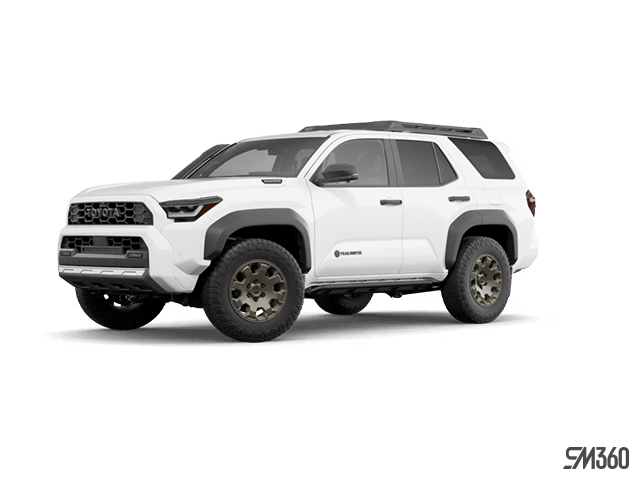
Photo for illustrative purposes only.
Find out more
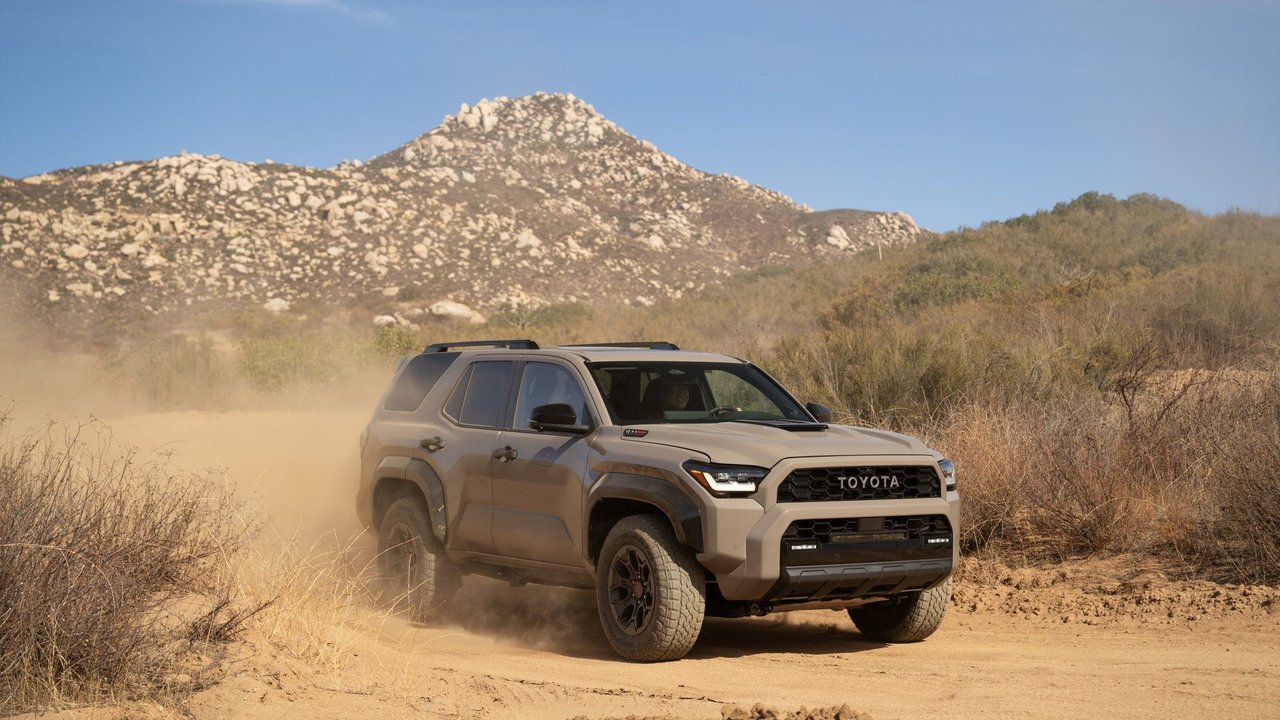
Towing math on a spec sheet rarely tells you what actually happens at the boat ramp. Ontario shoppers cross-shopping the 2026 Toyota 4Runner for a travel trailer, a pontoon boat, or a utility trailer full of firewood need to know which powertrain and trim combination backs up its numbers with real hardware.
The 4Runner splits into two towing stories: the gas i-FORCE engine and the hybrid i-FORCE MAX. Both matter differently depending on what is behind the hitch.
|
Trim |
Powertrain |
Seating |
Max Towing |
Payload |
|
SR5 |
i-FORCE (gas) |
7-passenger |
6,000 lbs (2,722 kg) |
558 kg |
|
TRD Sport |
i-FORCE (gas) |
5-passenger |
6,000 lbs (2,722 kg) |
558 kg |
|
TRD Off Road Premium |
i-FORCE (gas) |
5-passenger |
6,000 lbs (2,722 kg) |
558 kg |
|
Limited |
i-FORCE (gas) |
7-passenger |
6,000 lbs (2,722 kg) |
558 kg |
|
Hybrid TRD Off Road Premium |
i-FORCE MAX (hybrid) |
5-passenger |
5,800 lbs (2,631 kg) |
542 kg |
|
Hybrid Platinum with Fixed Running Board |
i-FORCE MAX (hybrid) |
5-passenger |
5,800 lbs (2,631 kg) |
542 kg |
|
Hybrid Platinum |
i-FORCE MAX (hybrid) |
5-passenger |
5,800 lbs (2,631 kg) |
542 kg |
|
Hybrid TRD Pro |
i-FORCE MAX (hybrid) |
5-passenger |
5,800 lbs (2,631 kg) |
542 kg |
|
Hybrid Trailhunter |
i-FORCE MAX (hybrid) |
5-passenger |
5,800 lbs (2,631 kg) |
542 kg |

Both powertrains share the same 2.4 L turbocharged four-cylinder block, but they produce different results. The gas i-FORCE makes 278 hp and 317 lb-ft of torque, and it carries the highest tow rating in the lineup at 6,000 lbs (2,722 kg).
The hybrid i-FORCE MAX adds an electric motor to the same block, raising output to 326 hp and 465 lb-ft of torque. That is 148 lb-ft more twist than the gas engine, yet the hybrid’s tow rating sits slightly lower at 5,800 lbs (2,631 kg). Extra weight from the hybrid battery and motor accounts for the gap.
So the tradeoff is direct: the gas engine pulls a heavier trailer on paper, while the hybrid delivers noticeably stronger torque for the climb out of a boat ramp or a loaded start on a grade.
Hardware backs up both. Every 2026 4Runner trim comes with a tow hitch receiver and a 7-pin trailer wiring harness as standard equipment, so nothing needs to be bolted on after the sale. A trailer brake controller is standard on every hybrid trim but is not included on any gas trim. A trailer backup guide with straight path assist goes a step further, appearing standard on the Hybrid Platinum with Fixed Running Board, Hybrid Platinum, Hybrid TRD Pro, and Hybrid Trailhunter, but it is left off the Hybrid TRD Off Road Premium and every gas trim.
A lighter aluminum fishing boat or a small utility trailer rarely taxes either powertrain. In that range, the deciding factor becomes convenience equipment rather than raw capacity, and that is where the standard trailer brake controller on hybrid trims saves a stop at the parts counter.
A heavier travel trailer or a tandem-axle boat trailer closer to the 4Runner’s ceiling puts the gas i-FORCE’s 6,000 lb (2,722 kg) rating to work. Payload matters here too: the gas trims carry a 558 kg payload rating versus 542 kg on the hybrid, a 16 kg difference that covers passengers, gear, and tongue weight together, not just the trailer itself.
Ontario’s cottage-country roads add another layer. The Limited and Hybrid Platinum with Fixed Running Board trims are both rated at an 18-degree approach angle and a 23-degree departure angle, numbers that matter when a gravel driveway or a rutted boat launch approach gets steep.
Cargo and seating change with the body style. The Limited seats seven and offers 1,269 L of cargo volume behind the second row, dropping to 343 L with all three rows in use, useful for families hauling gear alongside a trailer.
The Hybrid Platinum with Fixed Running Board seats five and offers 1,206 L behind the rear seats, a two-row layout that trades the third row for a lower load floor and a more focused gear hauler. Buyers who need both people and payload space should weigh seating configuration against the trailer they are actually pulling, not just the tow number on the sheet.
For drivers who need the highest tow rating and flexible seating, the SR5 or Limited in the gas i-FORCE lineup deliver the full 6,000 lbs (2,722 kg) rating with a 7-passenger cabin. The Limited adds the added convenience features of the higher trims, useful for a family that tows occasionally.
For drivers who tow more often, and want the trailer brake controller and backup guide included rather than added later, the hybrid trims built around i-FORCE MAX make more sense despite the 200 lb (91 kg) lower tow ceiling. The extra torque helps on hills and boat ramps, and the standard trailer tech reduces setup time at the hitch.
The TRD Off Road Premium sits between the two worlds in gas form: a 5-passenger cabin, the same 6,000 lb (2,722 kg) rating as SR5 and Limited, but without the trailer brake controller that comes standard on hybrids.
The 2026 4Runner splits its towing strength across two engines and nine trims, with the gas i-FORCE topping out the tow rating and the hybrid i-FORCE MAX adding torque and standard trailer hardware instead.
Visit Whitby Toyota in Whitby to walk around the 2026 4Runner in person, compare gas and hybrid trims side by side, and talk through payload and hitch details for your specific trailer.
Photo for illustrative purposes only.
Find out more
What Electronic On-Demand AWD Adds to the 2026 Toyota Crown Signia
Ontario roads swing from gravel shoulders to rain-slicked highways in the same afternoon. A shopper cross-shopping hybrid SUVs in Ontario often...
Read more
Multi-Terrain Select Explained: How the 2026 Toyota Tundra TRD Off Road Handles Rough Ground
Gravel shoulders, muddy laneways, and rutted cottage roads are part of daily life for a lot of Ontario truck owners. The question is whether a...
Read more
Is the 2026 Toyota Crown Signia More Spacious Than a Camry?
Choosing between a sedan and a raised hybrid SUV often comes down to one question: how will the space inside actually get used? The 2026 Toyota...
Read morePowered and developed by